Quantum information cannot be protected by copying. The no-cloning theorem forbids duplicating an unknown quantum state, so classical strategies like backup copies are unavailable. Instead, quantum error correction encodes information across the collective, entangled state of many physical qubits to create one robust logical qubit. The primary metric engineers use to measure the strength of this protection is code distance.
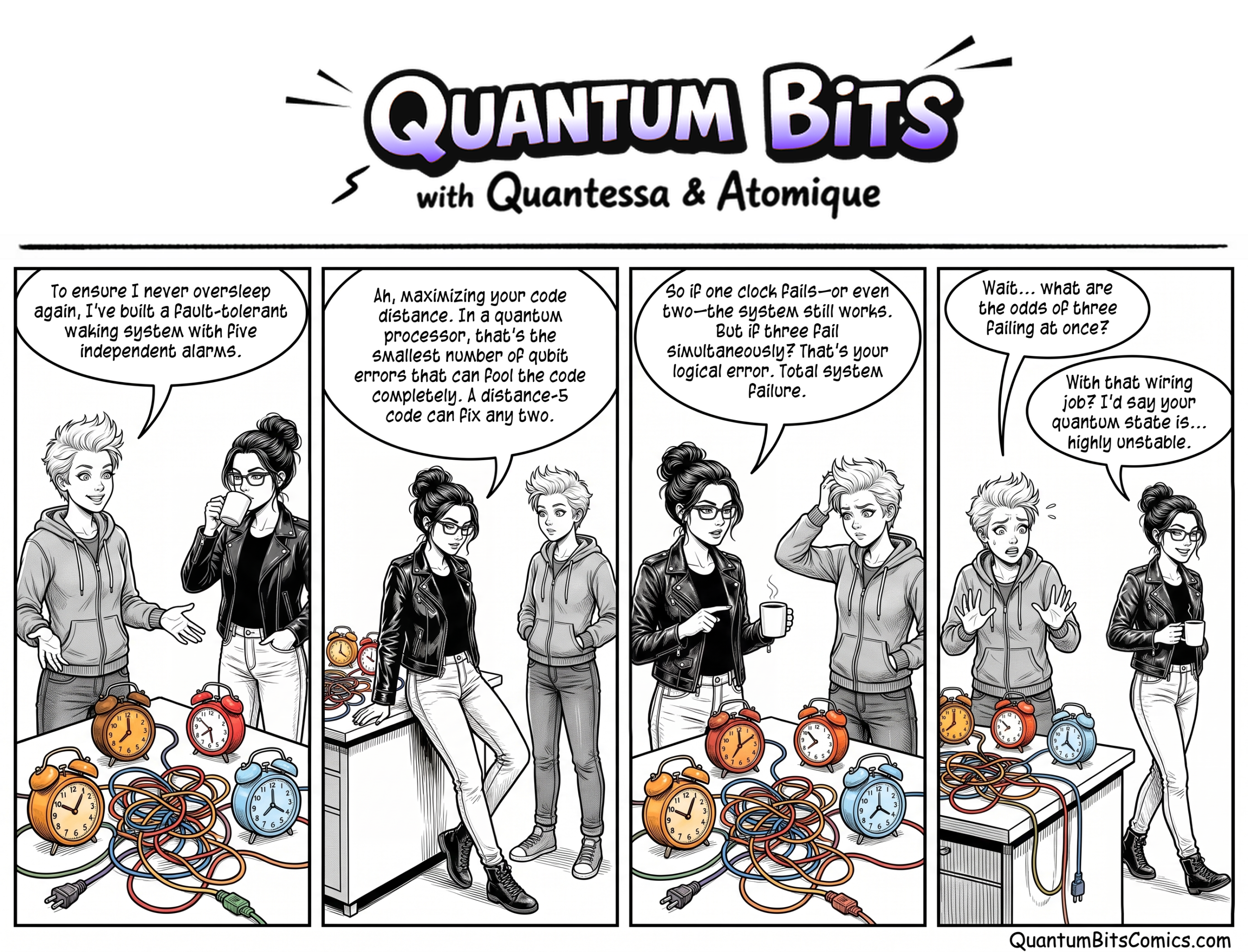
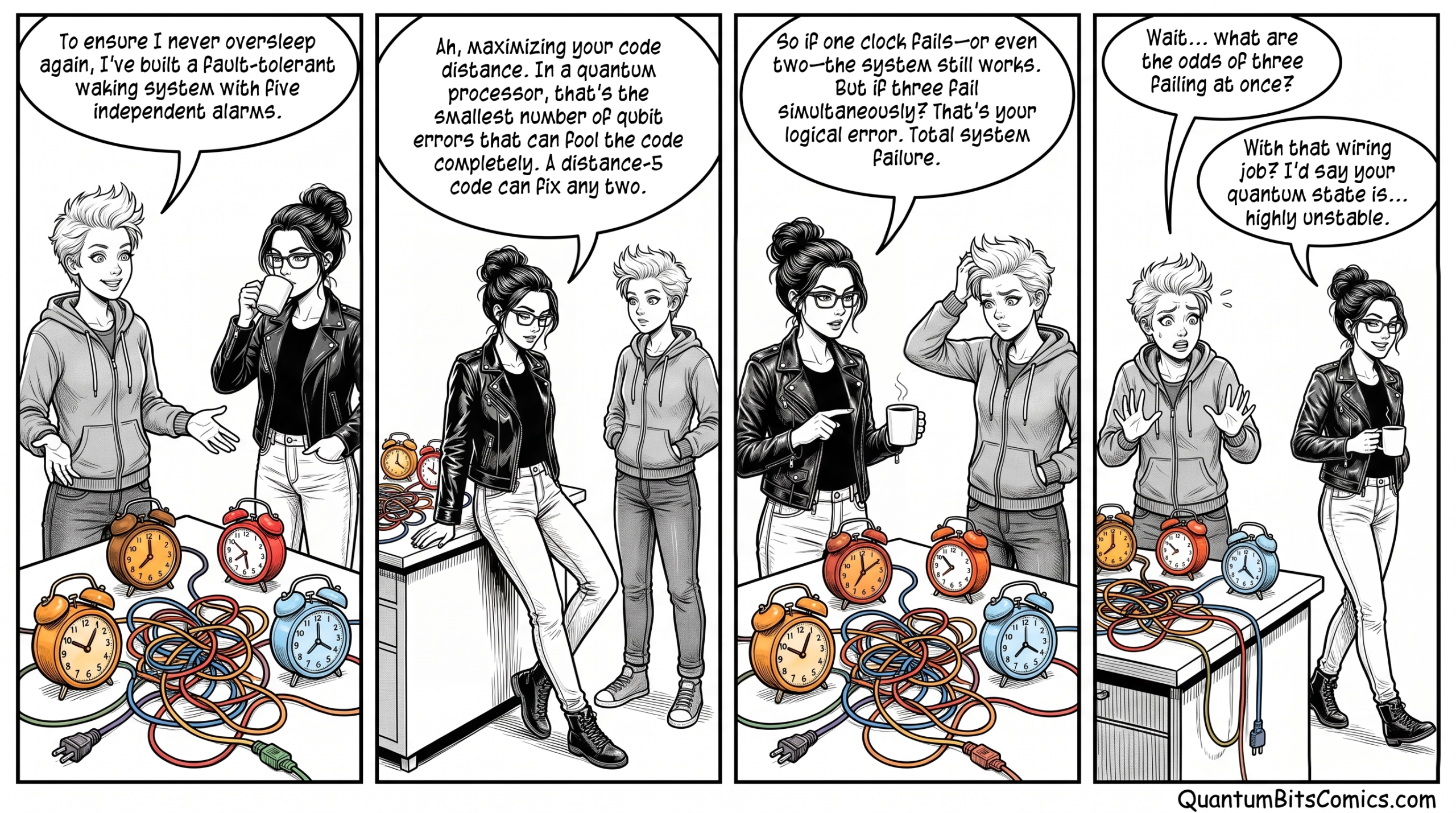
Code distance is the minimum number of physical-qubit errors that can combine to produce an undetected logical error. A code with distance d can detect up to d-1 errors and correct up to ⌊(d − 1)/2⌋ errors. These are different thresholds, and the distinction matters.
A distance-2 code can detect that a single error has occurred, but it cannot determine which qubit was affected, so it cannot correct it. This is useful for error detection schemes but not for fault-tolerant computation. A distance-3 code, such as Steane’s seven-qubit code, can correct any single-qubit error. A distance-5 code can correct two simultaneous errors. As long as the number of physical errors stays below the correction threshold, the system continuously detects and fixes mistakes without ever measuring or destroying the underlying quantum information.
Building quantum computers with high code distances is a central hardware challenge. Increasing the distance requires committing more physical qubits to encode each logical qubit. Steane’s distance-3 code requires 7 physical qubits. A distance-7 surface code requires hundreds. System architects constantly weigh the need for a high code distance against the practical cost of building and controlling large arrays of physical qubits. Lower physical error rates ease this tradeoff: the cleaner the hardware, the less redundancy is needed to reach a given level of logical protection.
Subscribe on Substack at https://qubitguy.substack.com/