A simplistic view of the progression of quantum computers has three stages, each with a question:
Stage 1: Can quantum computers be built at all, regardless of the quantity and quality of qubits?
Stage 2: Can errors be detected and corrected?
Stage 3: Can quantum computers scale to a sufficiently large number of high-quality qubits?
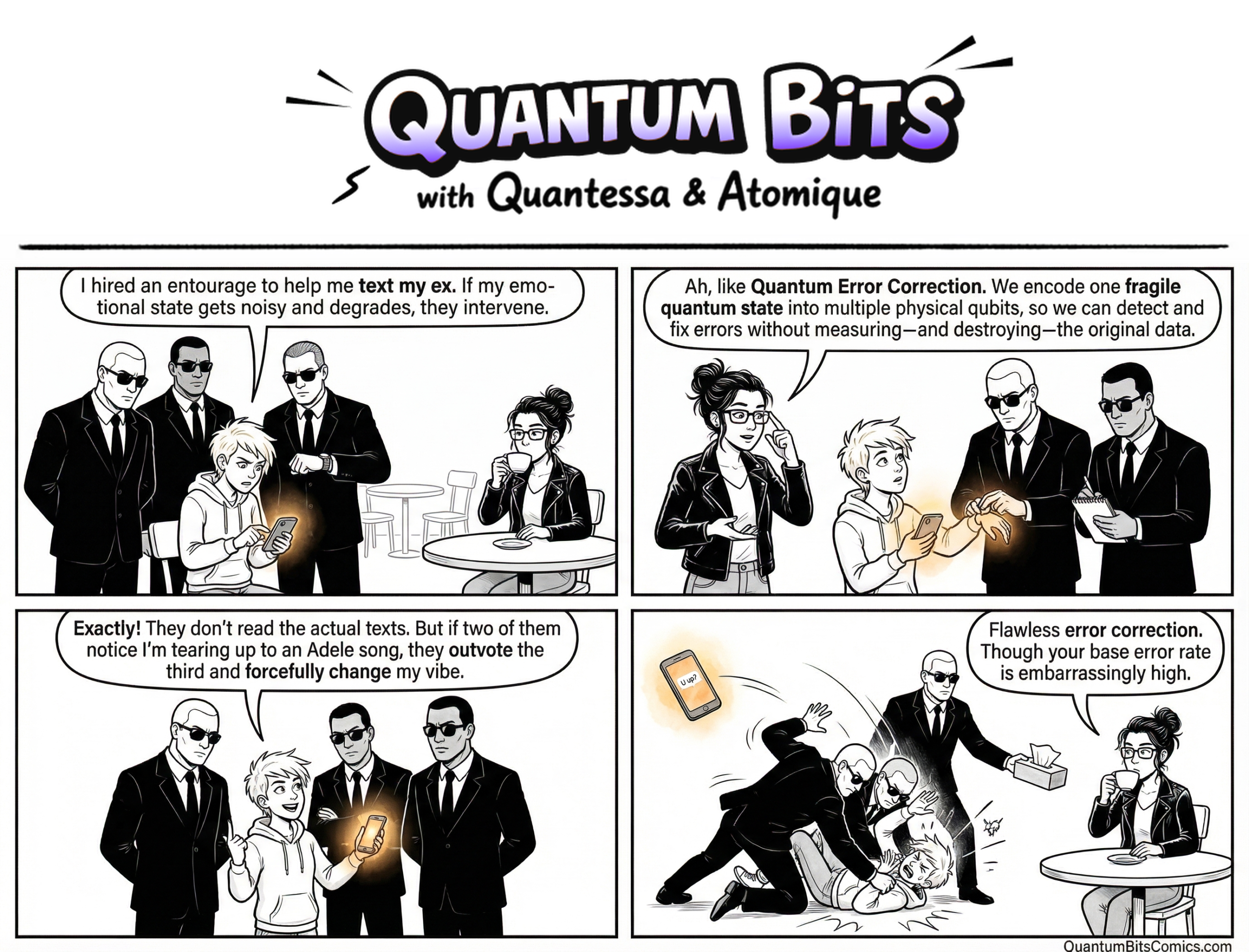
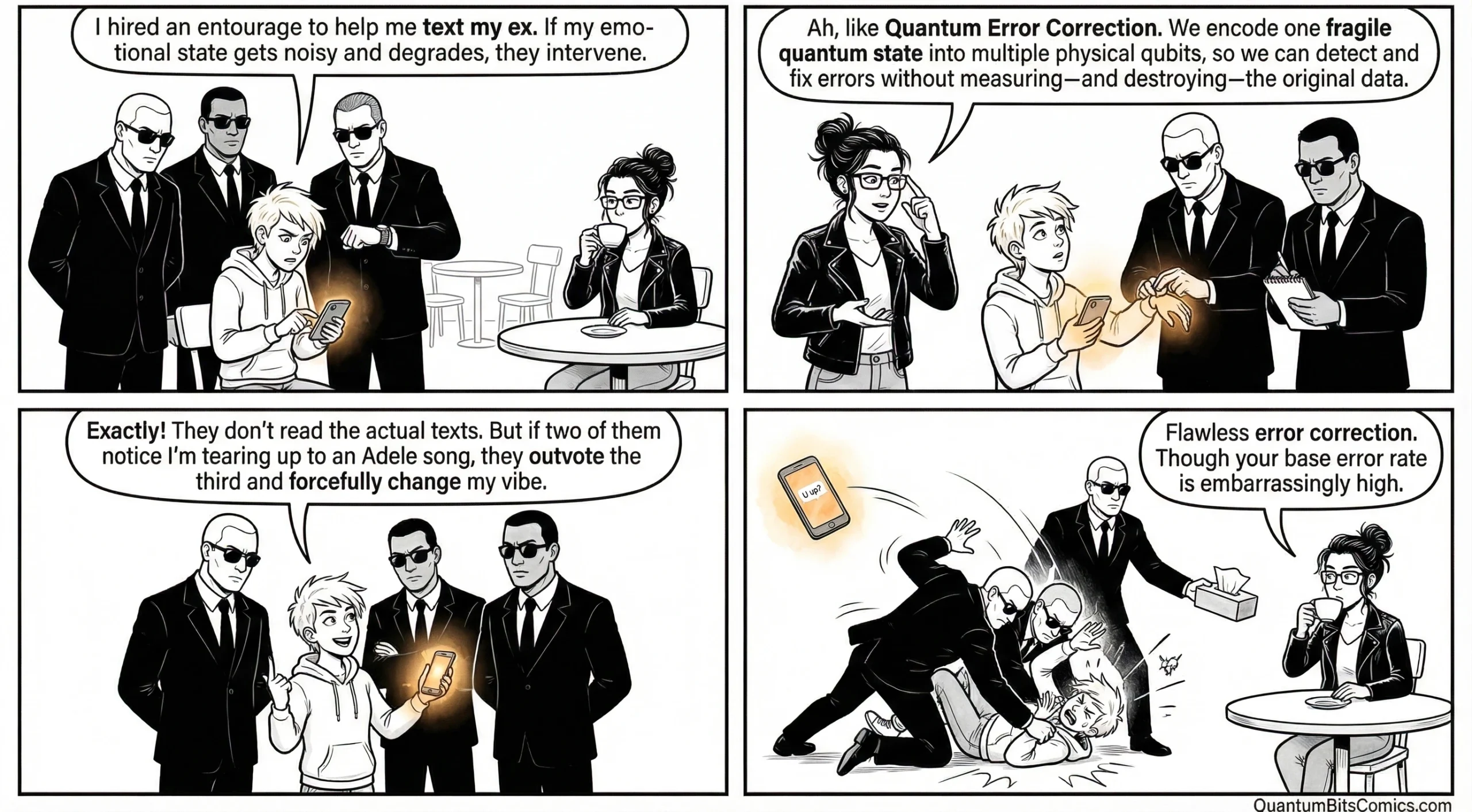
Error correction is the key question in stage 2. Quantessa explains:
Quantum computers are extremely sensitive. The qubits that store information can be thrown off by the tiniest disturbance: a stray vibration, a small temperature fluctuation, even leftover electromagnetic noise. When a qubit picks up an error, the computation goes wrong. And unlike a classical computer, you can’t just check a qubit’s value to see if it’s correct, because measuring it destroys the superposition you’re trying to protect.
Quantum error correction is a clever workaround. Instead of storing one piece of information in one qubit, you spread it across a group of qubits. These extra qubits don’t hold their own data; they work together so the system can detect when something has gone wrong without directly looking at the protected information. Think of it like a group project where five people each know part of the plan. If one person gets confused, the others can compare notes and figure out what changed, then fix it, all without revealing the full plan to an outsider. The “logical qubit,” the reliable unit of information, emerges from the teamwork of many “physical qubits.” This is one of the biggest engineering challenges in quantum computing today. Building machines with enough high-quality physical qubits to make error correction work at scale is what separates experimental quantum devices from the fault-tolerant quantum computers that will eventually tackle real-world problems.
Looking for a more detailed description? Find it at quera.com/glossary