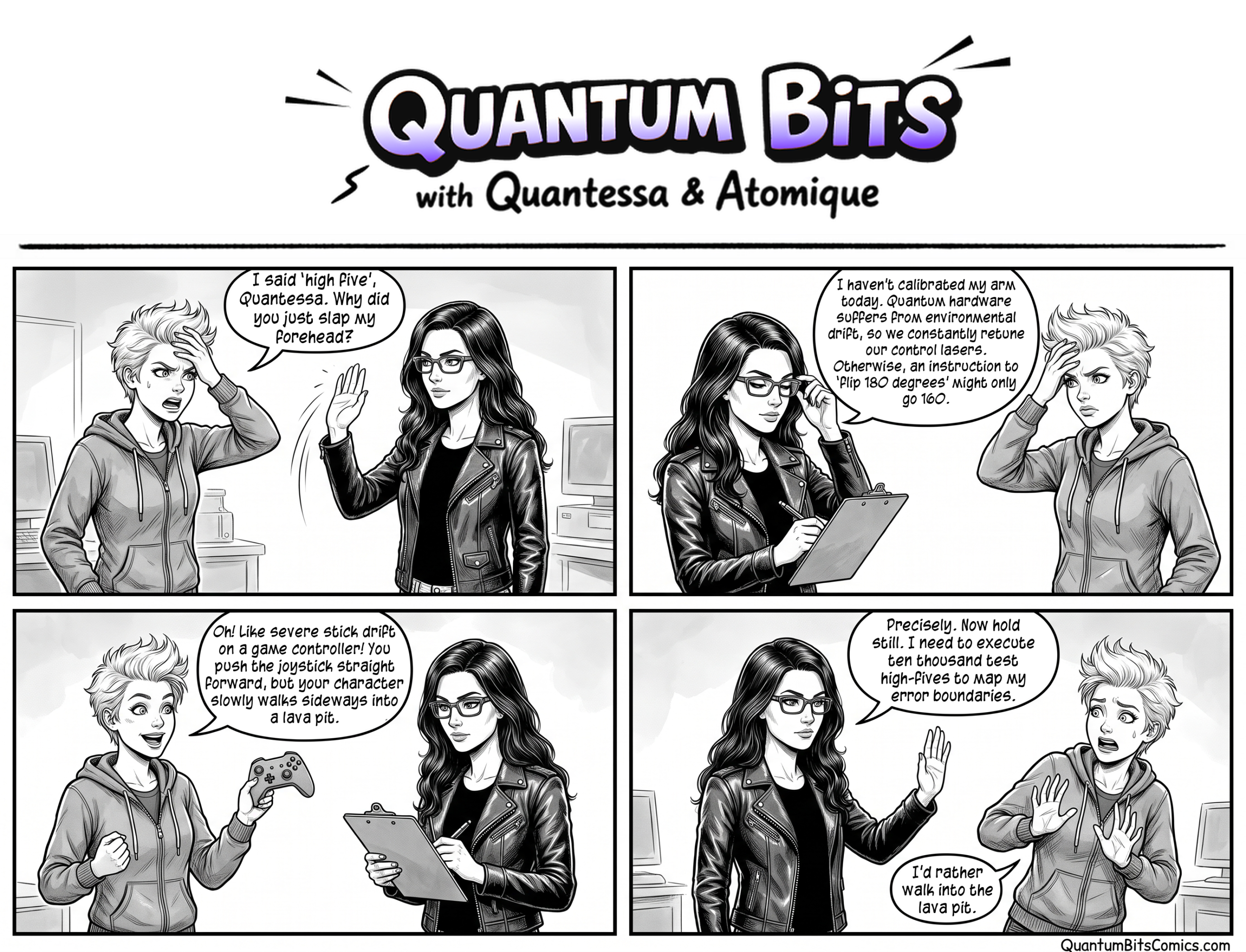
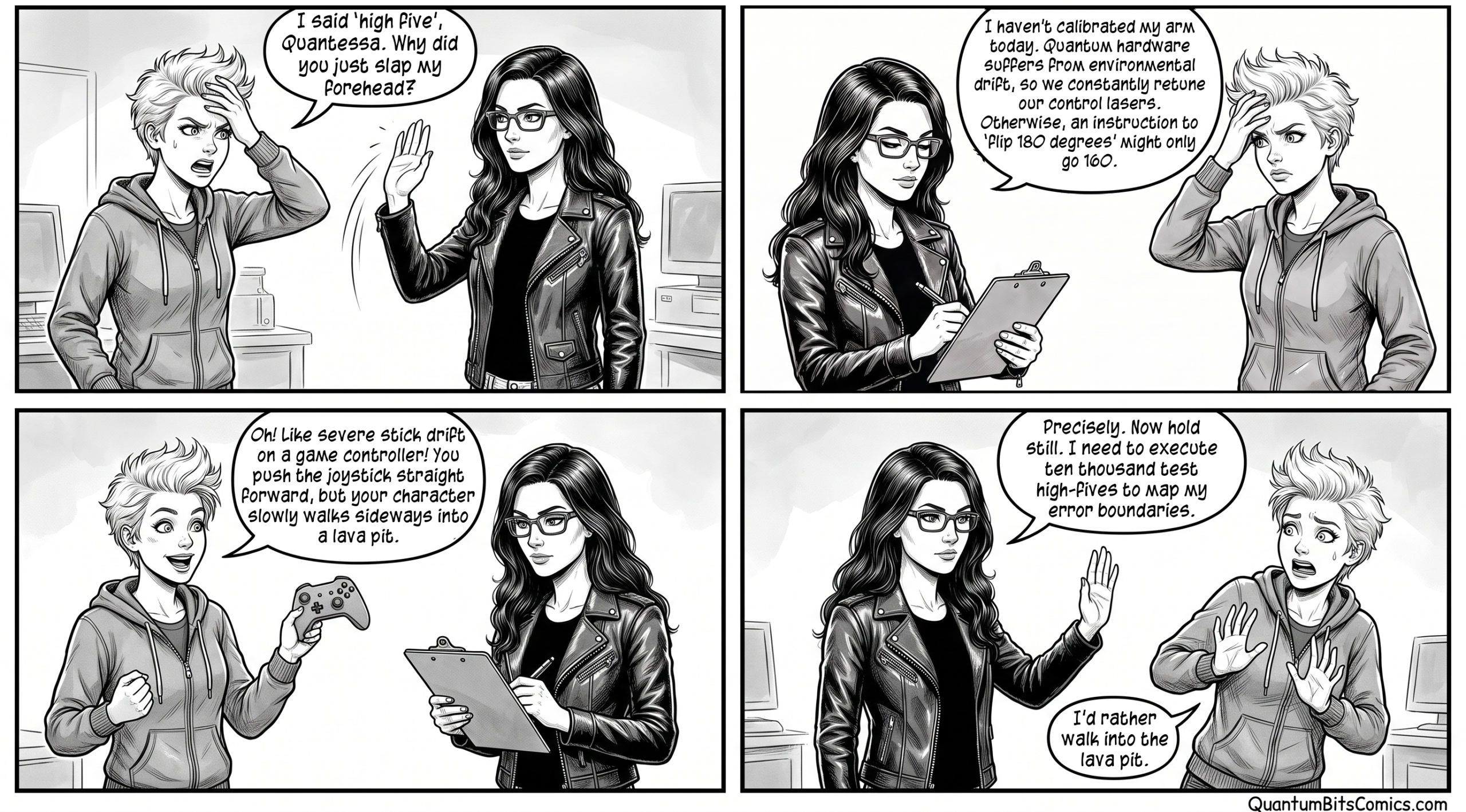
A quantum computer is an instrument that constantly falls out of tune. If you send a precisely shaped microwave pulse to a superconducting qubit at noon to perform a specific logic gate, that exact same pulse might produce an error just five minutes later. The physical environment shifts constantly. Temperatures fluctuate by fractions of a degree, background electromagnetic noise varies, and the hardware itself drifts. To keep the system executing accurate operations, the control signals must be continuously updated through a process called calibration.
Calibration acts as the bridge between abstract quantum algorithms and physical reality. It involves running thousands of short diagnostic circuits with known outcomes. If an operation is meant to flip a qubit perfectly from a zero state to a one state, the control system executes the command and measures the result. If the qubit under-rotates, the system calculates a correction. It might increase the amplitude of a microwave burst or adjust the frequency of a laser beam in neutral-atom platforms like those developed by QuEra. These adjustments ensure the hardware continues to faithfully follow its mathematical instructions.
This diagnostic work carries massive overhead. On current generation quantum hardware, calibration routines can consume hours of system time every day. Tuning a small handful of isolated qubits is straightforward. But as processors scale up to hundreds of qubits, the complexity compounds. The system must map and correct for crosstalk, which occurs when a control signal meant for one qubit unintentionally affects its neighbors. Every new qubit added to a processor multiplies the number of potential interactions that must be measured and compensated for.
Moving from experimental prototypes to reliable computers requires removing humans from this loop entirely. Software engineers are building automated calibration systems that run continuously in the background. Many platforms now use machine learning to track historical drift and predict exactly when a specific qubit will need adjustment before its error rate spikes. This autonomous tuning is a strict prerequisite for building larger machines. Without meticulously calibrated physical operations, the foundational requirements for quantum error correction can never be met.
Subscribe on Substack at https://qubitguy.substack.com/