Quantum computers experience several distinct types of errors, each corrupting quantum information in a different way.
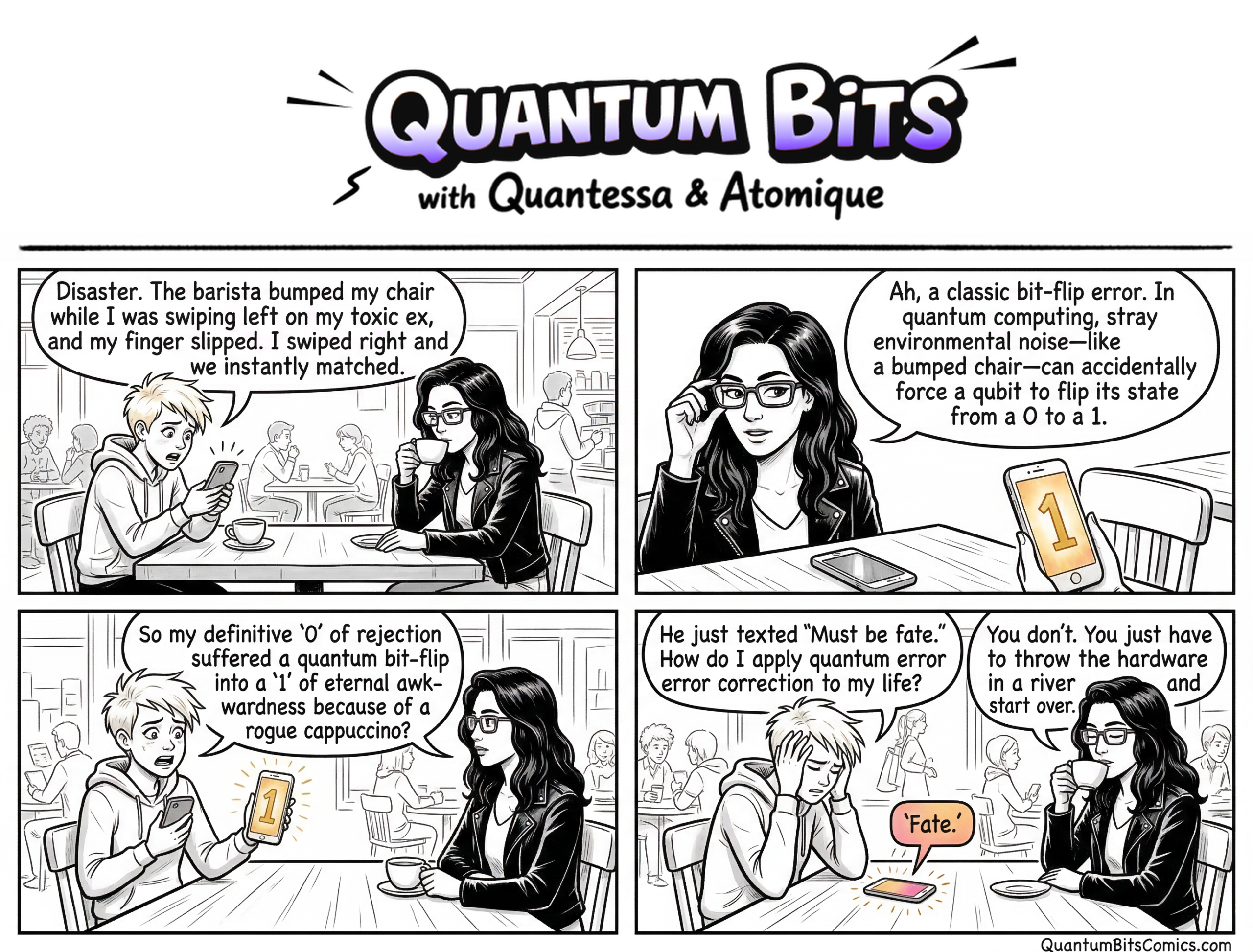
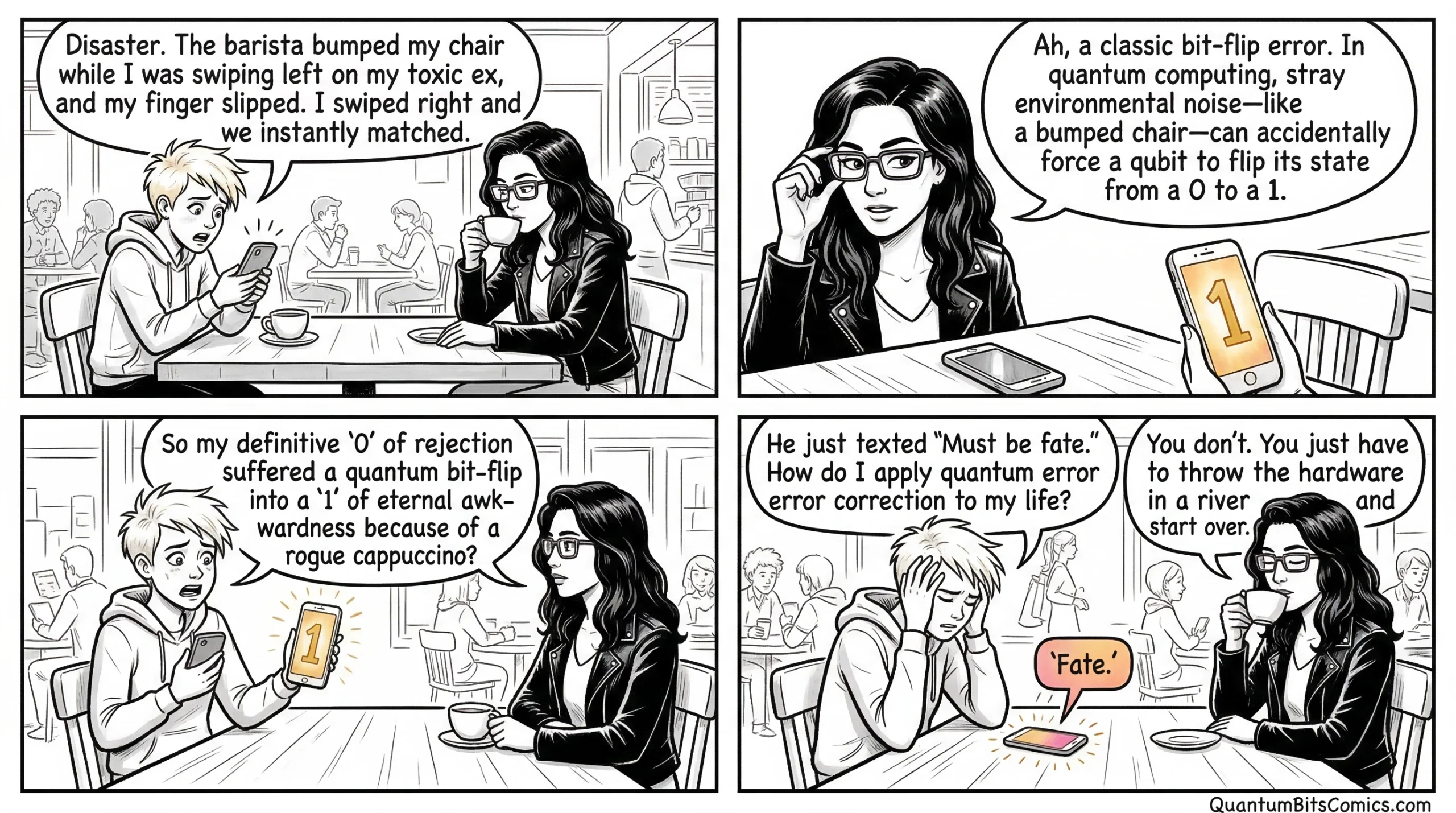
A bit-flip error swaps a qubit’s state, turning |0⟩ into |1⟩ or vice versa. This is the quantum analog of a classical bit error and the easiest to understand. A phase-flip error is subtler: it leaves the qubit’s probabilities unchanged but reverses the relative phase between the |0⟩ and |1⟩ components of a superposition. Phase-flip errors have no classical analog, but they are just as destructive because quantum algorithms depend on precise phase relationships to produce correct results through interference.
In practice, errors rarely arrive as clean bit-flips or phase-flips. Depolarizing errors randomly apply some combination of both, effectively pushing the qubit toward a random state. Amplitude damping describes the process by which an excited qubit decays to its ground state, releasing energy to the environment. This is the quantum equivalent of a system losing energy over time and is a dominant error source in many hardware platforms.
All of these errors stem from unwanted interactions between the qubit and its environment, a process collectively called decoherence. The rate at which errors accumulate determines how long a quantum computation can run before its results become unreliable. Reducing error rates through better hardware and correcting residual errors through error-correction codes together define the path to fault-tolerant quantum computing.
Subscribe on Substack at https://qubitguy.substack.com/